
Denied School at 15, She Launched a Movement that Educates 1000 Girls

My name is Robina Azizi, and I am one of the millions of girls deprived of education.
When the Taliban began taking control of Afghanistan's provinces, I attended school without concern, taking my mid-term exams, aiming to graduate from a good school and complete my studies. I had lofty ambitions, promising myself that one day I would study at a reputable university and help my country and girls deprived of proper education. But I never thought my dreams would end because I didn't go to school. Every day, I studied eagerly to achieve excellent grades.
But everything changed suddenly. One day, after finishing the exam, I was supposed to return home with my friends. That day felt different; I wanted to stay at school longer, as if I knew something was going to happen tomorrow. I looked carefully at the streets and alleys of Mazar-i-Sharif, as if I knew I wouldn't see this place again. When I got home, I saw my mother packing all our belongings; we had to leave. I asked my mother what had happened. She said, "Pack your clothes; we have to leave." I said, "Mother, I have an exam tomorrow; I can't abandon my school." She replied, "We've booked your flight ticket; we have to leave. The Taliban have taken control of the districts of Balkh; they might come into the city. The Taliban bring girls into captivity and force them into marriage. The lives of your father, brother, and sister are in danger; we have to go. You are a writer and have always written against the Taliban. If they find your writings, they'll kill you too."
I sat in the corner of the room, crying and overwhelmed with regret. I kept asking myself, “What will happen to my education? Will I fail because I have to leave school? I can't leave from here; I have an exam tomorrow." But I had to go. It was very difficult to tear myself away from my writing. I canceled my plans for the next day and had to bid farewell to Balkh, leaving my books half-read. But I left with the hope of returning, maybe to see my classmates again and fulfill my dreams.
I remember that night very well; I didn't sleep at all, the night I called the last night of my life in Balkh. I thought of my friends, school exams, and the idea that if I didn't go to school, I would fail. Finally, morning came. It was a beautiful morning, but I had to be ready to fight; I had to pack my travel bag.
At ten in the morning, we took the flight to Kabul. I didn't know if I would come back, but I planned to make up for the lessons I had missed. It was October 10, 2021, when we headed towards the airport. In the airport square, chaos reigned; everyone was in a state of panic, fleeing for their lives. And we were among them, seeking to save ourselves. After much resistance, I arrived in Kabul, leaving school behind. They welcomed us to Kabul, but I remained silent, sad, not smiling, feeling like a part of me was left behind.
In Kabul, I saw girls spending their last exam days. Sometimes, I longed to go to school too. I wrote to myself, "I have come to survive." This sentence became my mantra. Days passed, and every day brought news of the Taliban seizing more provinces, spreading fear. Yet, I still had hopes of returning to Balkh, figuring out how to continue my studies. Sitting with relatives, we gathered to know about the situation in Afghanistan. An urgent news broadcast announced that President Ghani had fled. Upon hearing this news, any hope for continuing life in Afghanistan, despite the Taliban's presence and their comfort in Kabul, faded away. It felt like the future had been taken away along with our President.
Rebuilding through Education
I lived without a destiny, struggling with my problems, but one day, I decided I had to rise again. I had to continue; I had to study, even if I couldn't go to school because I was afraid. But I decided I had to do something, or else I might witness an illiterate generation. I went back to my books, fought, and started striving for a better future. I found courses available in Kabul, started studying English, started reading again, and began the fight for a better future. I promised myself that, despite thousands of problems, I would fight for myself and for the girls of my country. I started raising awareness among Afghan families, trying to make them understand the importance of their daughters' education, urging them to let them continue their studies.
Later, with the help of one of my course instructors, I enrolled in an online school. I had to continue my studies online, but I didn't have any documents to prove that I was in the tenth grade because I hadn't completed the tenth grade. But despite not having the documents, they allowed me to continue my studies in that online school. While studying, I was raising awareness for girls to join me. I helped my classmates in English courses find their place in the classes.
Days passed in Kabul, and we slowly became used to the deprivations around us. I began sharing my story through media outlets such as Tolo and other platforms, determined to improve on my talents and not to let my voice be forgotten. When participating in these programs, my brother said, "Do you know how dangerous it is to speak in the media, especially in these conditions?" But I didn't consider the danger; I just wanted to be a beacon of hope amid despair. Life continued with these struggles.
One day, when I went to attend my classes, I heard that the courses were closing. My brother encouraged me by saying, "Robina, you are very strong. These days will pass. You have to fight. If you give up, you can't succeed anymore. The Taliban will be pleased when you surrender, but there is no more hope in Afghanistan."
I had lost patience and couldn't tolerate this situation anymore. But I had no choice. After many struggles inside Afghanistan, I decided that I had to leave the country, even though I was living in the country with part of my family. There was no other way left for me. We were finally forced to go to Pakistan. My sister, two brothers, and I had to endure this pain. My education meant a lot to my family. I fought a lot to not leave Afghanistan, but what forced me was the uncertain future. Afghanistan was no longer a place to live. On October 28, 2022, I joined my family in Islamabad, feeling a little freedom.
I didn't study in Pakistan, but all my lessons were online. In addition to taking advantage of my own online opportunities, I also involved other girls. Amidst these activities, I decided to pave the way for girls to create change. Life conditions for girls were worsening daily; they were losing hope and needed a new path. My move to create change was urgent and necessary. As a victim deprived of education, I wanted to be the voice of girls, to represent them in international media, and to highlight their challenges. The world needed to pay attention to the situation of girls in Afghanistan.
While defending and raising the voices of girls, I aimed to establish Girls on the Path of Change (GPC). I discussed this with my brother and decided to take action. Girls needed my help. My family supported me; they believed in creating motivation for girls, and this made me very happy.
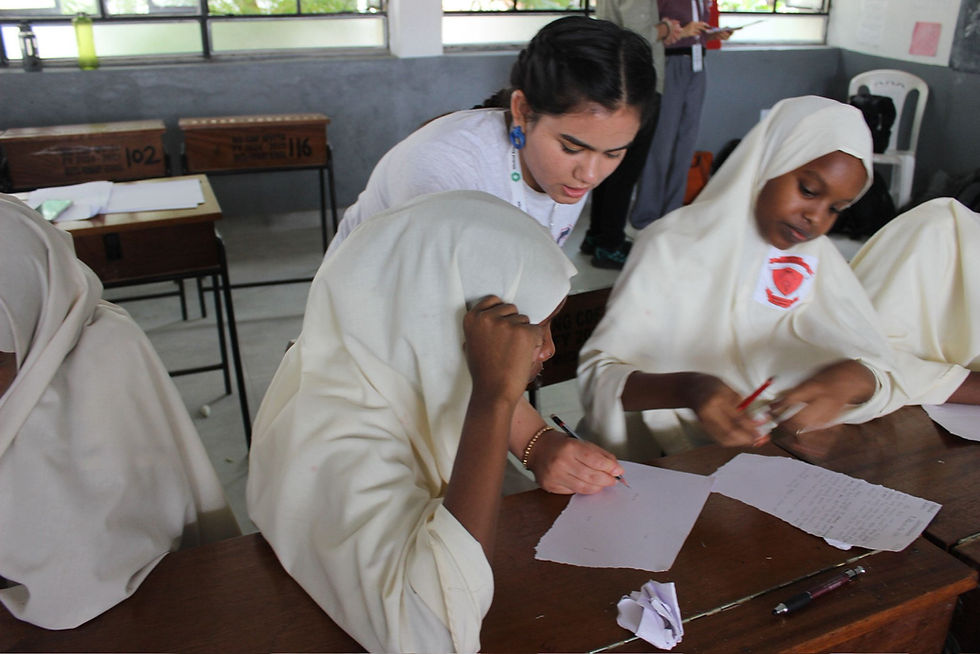
In the beginning, I was alone. My brother and I took steps together without support from anyone else. But after the first session, named "Story of Schoolgirls," twenty girls from all over the country joined me and supported my activities. We grew larger every day, our family expanded continuously, and I needed to balance more activities alongside my charitable work and online lessons.
Our team in Afghanistan was strong and cohesive. Girls on the Path of Change officially started its activities on April 7, 2023, and made significant progress. I am the first schoolgirl to establish an institution in Afghanistan to motivate girls to continue their education.
We created classes for girls in different languages, with over a hundred students in all our classes. Unfortunately, some classes were cancelled due to poor internet access in Afghanistan. But after I asked my teacher, Ana, to collaborate with me in our organisation's classes, we had more foreign teachers. We needed many more volunteers from non-Afghan countries because they had proper internet access, and we wanted our students to learn the language from trained individuals.
The number of our students increased daily, and there was a growing interest in our online classes. Our team from around the world worked to help girls, but without financial support from any organisation, I faced many challenges. Sometimes, I couldn't hold any activities, but I continued. Despite not having the right tools, which made my work more difficult, I was committed to my mission. I had to support the girls of my country; they needed me.
One of our many challenges was holding online sessions with trained poets and psychologists to inspire girls. From June 25 to 27, 2023, we held seminars and workshops in more than five provinces of Afghanistan for over two hundred girls. These programs reached the farthest corners of Afghanistan, bringing smiles back to the girls' faces. Organizing these programs was very difficult due to the fear of the Taliban, potential disruptions, and the risk of girls being arrested. Despite these challenges, we held programs in Kabul, Balkh, Baghlan, Bamyan, Takhar, Ghazni, and other provinces.
We were delighted with the girls' satisfaction with these programs. The girls organised these events, showcasing their handicrafts, paintings, books, clothes, and creations. It was one of the best programs we had ever conducted for girls in Afghanistan in such a short time.

Our team has always been active in helping and motivating girls. We worked tirelessly for our programs, staying up day and night to bring smiles to their faces. I understood that merely talking about challenges wasn't enough; we had to take action.
On September 18 in that year, in collaboration with several other organisations, we sent a letter to world leaders and neighbouring countries to address the closure of schools for girls at the age of two. I was the representative of a thousand schoolgirls who signed this letter.
In the final days of 2023, as the students' holidays began, we had nearly 500 students in our first round of classes, ranging from beginner to advanced levels.
Fortunately, after many struggles and hardships, on February 15, I relocated to Germany with my family. Even in Germany, I remain committed to advocating for the education of my sisters in Afghanistan.
When I arrived in Germany, I was determined to strengthen my advocacy and support for girls—especially my classmates from Afghanistan. I began sharing my story through media platforms to raise awareness about the situation of girls and women back home. I also started learning German and enrolled in an online school, allowing me to continue my own education while helping provide free educational programs for Afghan girls and refugees in Iran and Pakistan.
Soon after, I began traveling to attend conferences and events focused on Afghanistan’s humanitarian crisis. I became a voice for Afghan girls in international spaces. Just five months after arriving in Germany, I made my first trip to Doha, Qatar. At Georgetown University Qatar, I delivered a speech about the challenges Afghan girls face, our work through GPC, and the importance of defending girls’ right to education. I called on international organizations and NGOs to increase their support.
Our mission continued to grow. In 2024, I was honored with The Diana Award, the most prestigious recognition a young person can receive for humanitarian work. Receiving this award was not just a personal honor—it was a reminder of a promise I made the day I was forced to leave my home in Balkh.

That day, I cried not just for leaving my country but for missing my mid-term exam. It was a heartbreaking moment, but I knew it wasn’t the end. I promised to fight until every Afghan girl has the right to education again—and that promise still drives me today.
In Germany, I began exploring the country city by city. Every new place taught me something, and one of my first experiences was traveling to Karlsruhe for a Model United Nations (MUN) conference. There, I connected with other young changemakers and shared the GPC story, continuing to amplify our mission.
In 2025, I traveled to Sri Lanka to attend a youth forum where I represented Afghanistan as a human rights and education activist. I spoke about how the Taliban’s ban on girls’ education affects millions, and how GPC continues to provide free online classes to those denied access. I believe our voices matter—and those of us living in countries like Germany have a responsibility to raise awareness for those who cannot speak freely.
I live, study, travel, and advocate—not just for Afghan girls but for every child robbed of their childhood. Like many others in Afghanistan, I didn’t get to live mine fully. That’s why I use my voice for those who can’t. Today, my story has reached thousands through platforms like the Malala Fund, Amnesty International, More to Her Story, Missing Perspectives, The Diana Award, and others.
In Pakistan, I never had the opportunity to travel, speak at events, or build an international network. Now, each time I travel, I remember the girls I grew up with, many of whom were forced into early marriage. They never got the chance to dream. I carry them with me in everything I do, and I dedicate my time to being their voice and fighting for the next generation.
In May, I was invited by Bochum University to share my story and speak with students. I’ve also worked with European youth on democracy and civic participation and was featured in publications such as the Spanish magazine Fundación para el Avance de la Libertad and Canada’s Luther College magazine. These moments made my parents incredibly emotional and proud—proof that our work is reaching beyond borders and making a real difference.
One of the highlights of our work at GPC was the first talent show hosted by Orchard Street Academy in Massachusetts, USA. Our students shared their stories, voices, and talents with teachers, students, and parents through a Zoom event. In 2025, many of our students graduated from our free online English program and received certificates—a joyful and emotional moment for all of us. The ceremony took place just a week before my birthday, making it the most meaningful gift I could have asked for.
GPC is more than an organization. It’s a home. A space for Afghan girls, refugees, and youth from different countries who might feel like they don’t belong. It’s a place where young people passionate about leadership and change come together. We’ve supported refugees in Germany from Ukraine, Kurdistan, Iran, Syria, and Afghanistan—building friendships and learning from one another.
Through our Youth Ambassador Program, GPC connects young changemakers globally. We have ambassadors in many countries who raise awareness about girls’ education in Afghanistan and lead change in their own communities. Personally, I’ve learned so much from these amazing youth and work closely with them to expand access to education.
Most recently, I traveled to Kenya—a life-changing experience. I worked with children and primary school students, immersed myself in Kenyan culture, and witnessed the power of education and leadership in action. Every moment spent with the children reminded me why this mission matters. I took all the lessons I learned back with me, so I can use them to serve not only Afghan girls, but children everywhere.
I am deeply passionate about girls’ education and women’s rights, and I continue to support these causes worldwide. I actively participate in various projects, organizations, and volunteer initiatives that empower women. For my work, I have been honored with the Diana Award and recognized as a Movers of Tomorrow 2026 for my “ Breaking Barriers, Building Friendship” project in Germany, which supports refugees in connecting, sharing their stories, and learning from one another. My work has also been featured by UNHCR, highlighting the impact of these initiatives.
Through my travels, I advocate for women’s rights, sharing my story and amplifying the voices of girls around the world. GPC launched the “Speak for Women in Afghanistan” campaign to raise awareness of the challenges Afghan women face, support their right to education, and urge the global community not to normalize the Taliban regime.


Comments