
Inside the Girls First Institute in Kampala: Three days, 44 organisations, and a room that learned to listen
By Lynda Eunice Nakaibale, GFI Uganda Coordinator

What It Took to Bring Girls First to Kampala
By 7 am on Summit day, an hour before registration was supposed to open, people were already at the door of the Fairway Hotel. We’d asked everyone to arrive between 8 and 8:30 a.m. Nobody waited. I was standing there going through the morning’s checklist, braced for the usual slow trickle of a conference crowd, and instead watched girls and practitioners arrive in a steady stream a full hour early. Nobody had told them to. They just didn’t want to miss anything. Honestly, neither would I have.
I should have seen it coming. For two days before that, the same thing had been happening inside the room. Twenty-nine organisations from across Uganda, 58 people in total, had gathered to complete the GFI Advanced Training, the Girls First Institute’s two-year Girl-Centered Advanced Certification run by Girl Rising. What stuck with me wasn’t the curriculum. It was watching the practitioners talk to each other with a confidence I hadn’t expected this early into the work. It all added up to the Summit day.
Launched in Nairobi in 2017, the Girls First Summit is Girl Rising’s one-day training and networking event for grassroots leaders advancing girls’ rights. This year it drew 15 new organisations on top of the 29, alongside girls and volunteers. By the time registration was to start, 110 people were already in that lobby.
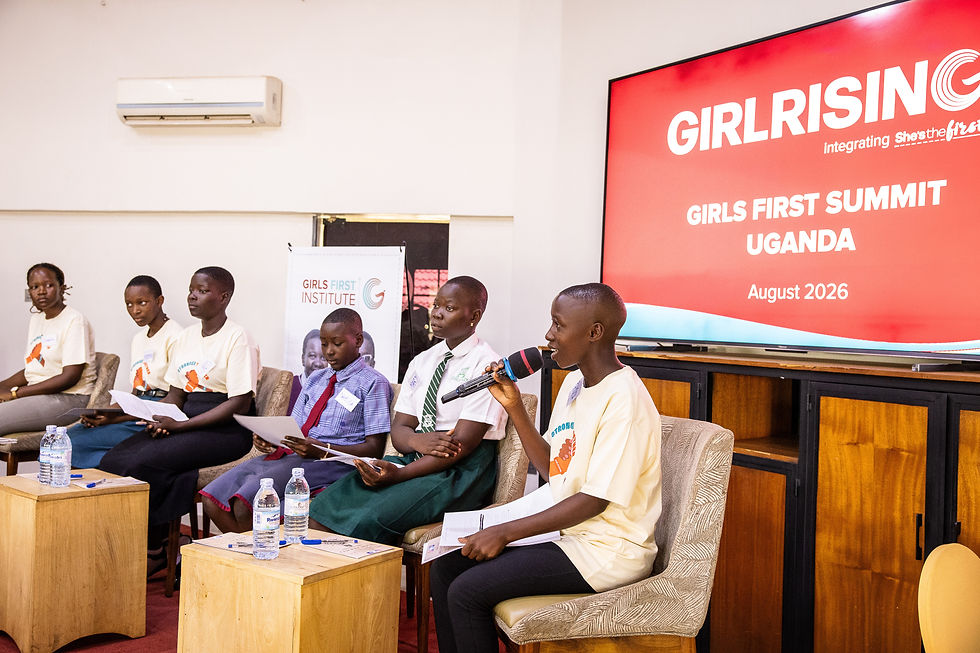
Girls Expert panel
Two days of hard truth, then a room built to listen
The training opened not with new material, but with a hard look back. As part of an exercise called Seeds, Stones and Surprises, the participating organisations were asked what had taken root over two years, what had been difficult to put into practice, and what they hadn’t expected. One question got the room talking: if this training stopped tomorrow, which practices would your organisation keep? Some answered instantly. Others admitted a practice lived mostly in the heads of the two staff members who’d learned it, and would likely disappear if they left. Nobody dressed that up.
One participant, reflecting on the full two years, put the stakes plainly: “I want to thank Girl Rising for this opportunity to be a part of the GFI Advanced program. Here in Uganda, most of these capacity-building programs are limited to large, well-established organisations. So being part of this program for the past two years has been worthwhile.” Another described a direct networking outcome that led her to write her first policy brief through a connection she met while training.
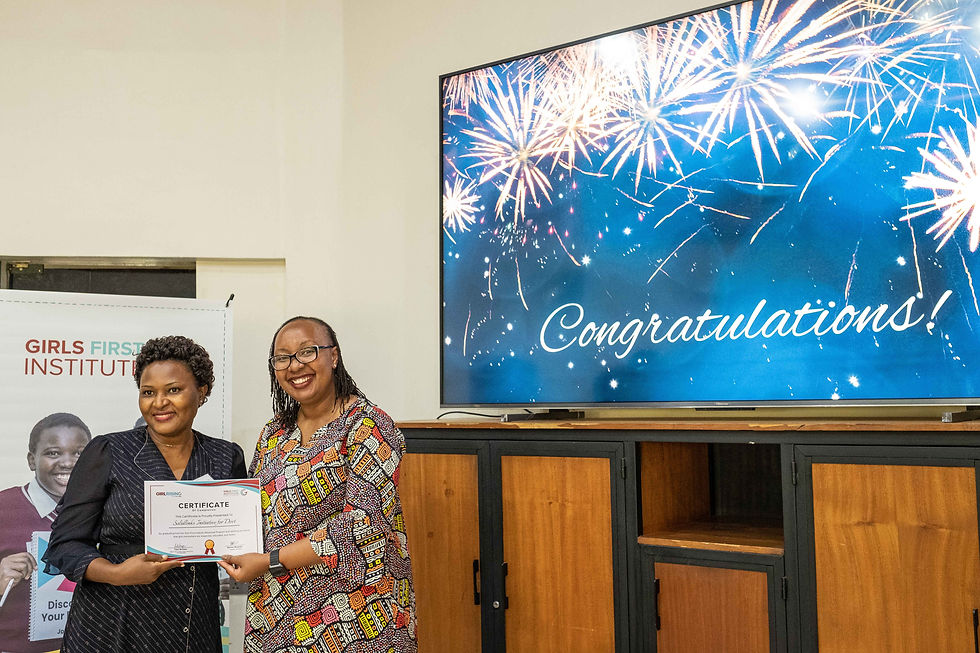
A representative from one of the 29 GFI Advanced organisations receiving a certificate upon graduating from the program.
On the second day, Aug. 26, the Monitoring and Evaluation session asked a harder question: how and why do we measure girl-centred work? The room split into two honest approaches: some organisations measure to satisfy donor reporting requirements while others measure to understand and improve their programmes.
Statistical data establishes scale and change over time:
The number of girls reporting increased confidence to speak rose to 72%
Average SRHR knowledge scores moved from 48% to 81%
Fifteen Girls Advisory Councils are now active across five districts.
These figures show funders and partners that the work is reaching girls and producing measurable change. But they cannot explain why a girl stopped attending, or what shifted for those who stayed engaged. Showing that requires qualitative accounts.
One of the organisations shared, “Our biggest takeaway is that listening to girls and co-creating activities and interventions with them is life-changing. We have seen our programs strengthened, registered increased attendance in our weekly convenings, girls are more confident to speak up because of the safe spaces we created, and overall we are happy to have been a part of this program.”
Statistical data and narrative data answer different questions. A programme that collects only one has an incomplete picture of its impact. Both need to be planned and funded as core parts of monitoring and evaluation.
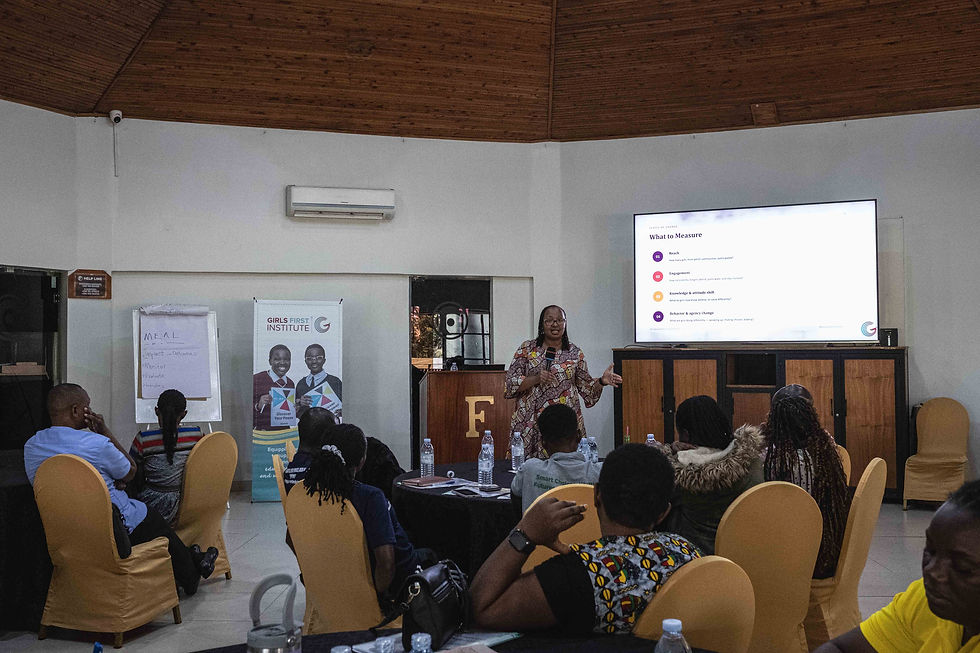
Session on Measuring What Matters: Evaluating Girl-Centered Impact by Kate Kiama.
By Summit day, the room had shifted from talking about girls to listening to them. The Girl Hour put a panel of girls, the youngest aged 12 and the oldest 18, before an audience of more than a hundred adults and asked them plainly:
What are you proud of right now?
Who do you talk to when something is wrong, and why that person?
What don’t the adults around you understand about you?
Nobody softened the questions, and the girls didn’t perform composure for the room. Watching a 12-year-old candidly answer these questions in front of the very people who fund and design the programmes meant to serve her is more hard-hitting than reading her words in an impact report. One girl asserted, “I want you to listen to us when we speak about our experiences, and support us,” that listening to girls is central to designing girl-centred programmes.
The afternoon carried two more noteworthy threads. Stories that Empower and Transform opened with a movie on Amina's story, a real account of a forced marriage from Afghanistan, asking practitioners to question where did Amina have power, or have it taken from her, and where did she reclaim her voice?
The room then turned the same questions to scenarios in Uganda:
A sixteen-year-old in Bududa too afraid of judgment to ask a clinic for contraception,
A girl in Entebbe staying in a relationship because a boyfriend covers her transport and school fees,
A boy too embarrassed by his peers to ask an honest question about his own body.
This progressed with a session on emotional wellbeing, asking practitioners to sit with a girl's pain and know how to handle it. They worked through real profiles of painfully familiar situations.
One such situation was of a girl married off without her consent and now navigating a teen pregnancy, voicing her story, ‘I feel like everyone else is moving forward, but my life has stopped.’ With these sessions, practitioners were reminded that they are trusted adults, not counsellors, and that their job was to listen without judging, link girls to the support they need, and engage with them as partners with a seat at the table.
What this asks of Girl Rising next
If this training stopped tomorrow, what would you actually keep? At the end of the day, we asked this question to ourselves, as we owed this answer to all the participating organisations, the girls who told a room full of adults exactly what they needed, and the volunteers who kept the week running.
None of them were there for a certificate. They were there because something in this work was worth learning for two years and standing up in front of a hundred strangers and saying what hadn’t worked.
We commit to check in with all 44 organisations in six months, not with a survey, but with a real conversation about what they kept and what they dropped, and a documented answer informing the girls what changed.
If you run programmes for girls and have wondered whether this training would hold up in your context, write to girlsfirst@girlrising.org.
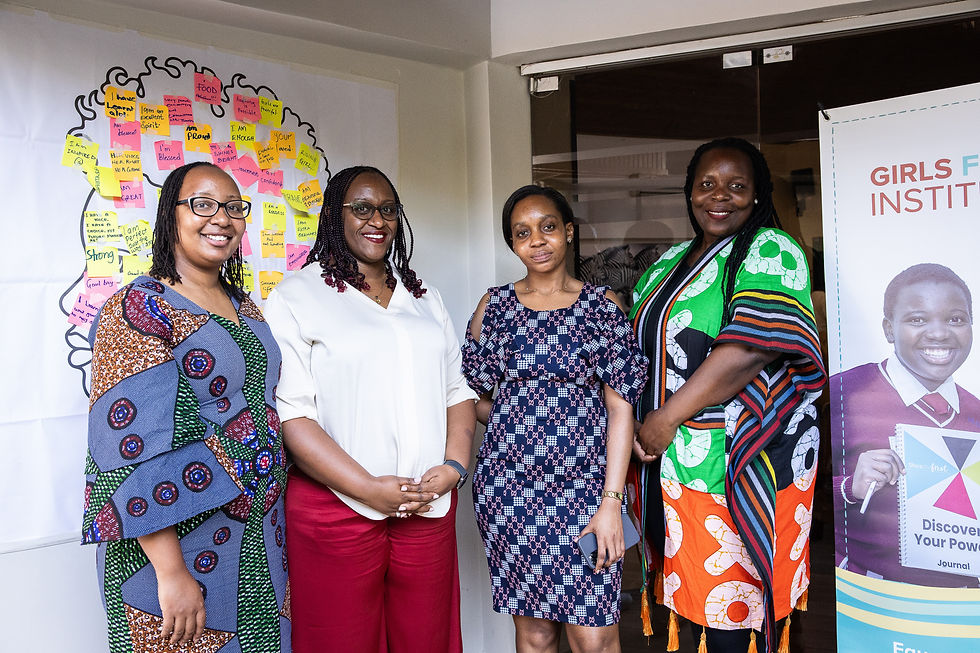
Girl Rising’s team at the event
Girl-centred programming really starts with listening to girls and making sure that they have a real say in the work we do. Girls Advisory Councils are one way we can do this by creating a space for girls to share their experiences and help shape programs that affect them. Girl Hour also gave us the chance to create that kind of space; to hear directly from girls and have honest conversations about what matters to them.’ - Florence Sidi - Global Initiatives Coordinator


Comments